
Step 01
Drives new blood-vessel growth into avascular tendon tissue, upregulates growth-hormone receptors, and works through the nitric-oxide system.
 ·
·  ·
· 
Heals faster. Moves better.
Lyophilised powder vial · Subcutaneous injection · Self-administered
30-day full refund if you don't notice a difference. No return required.
The Product
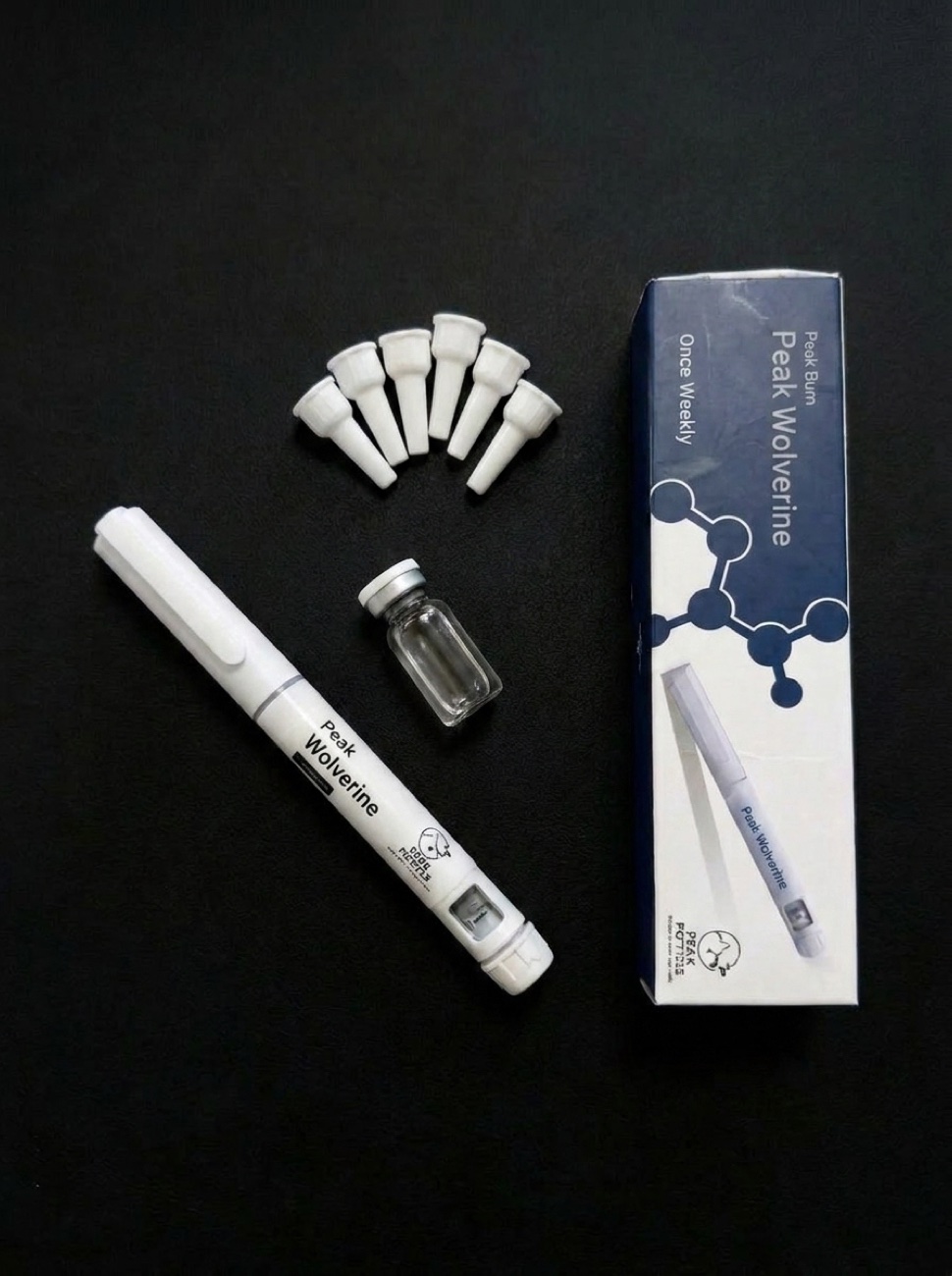
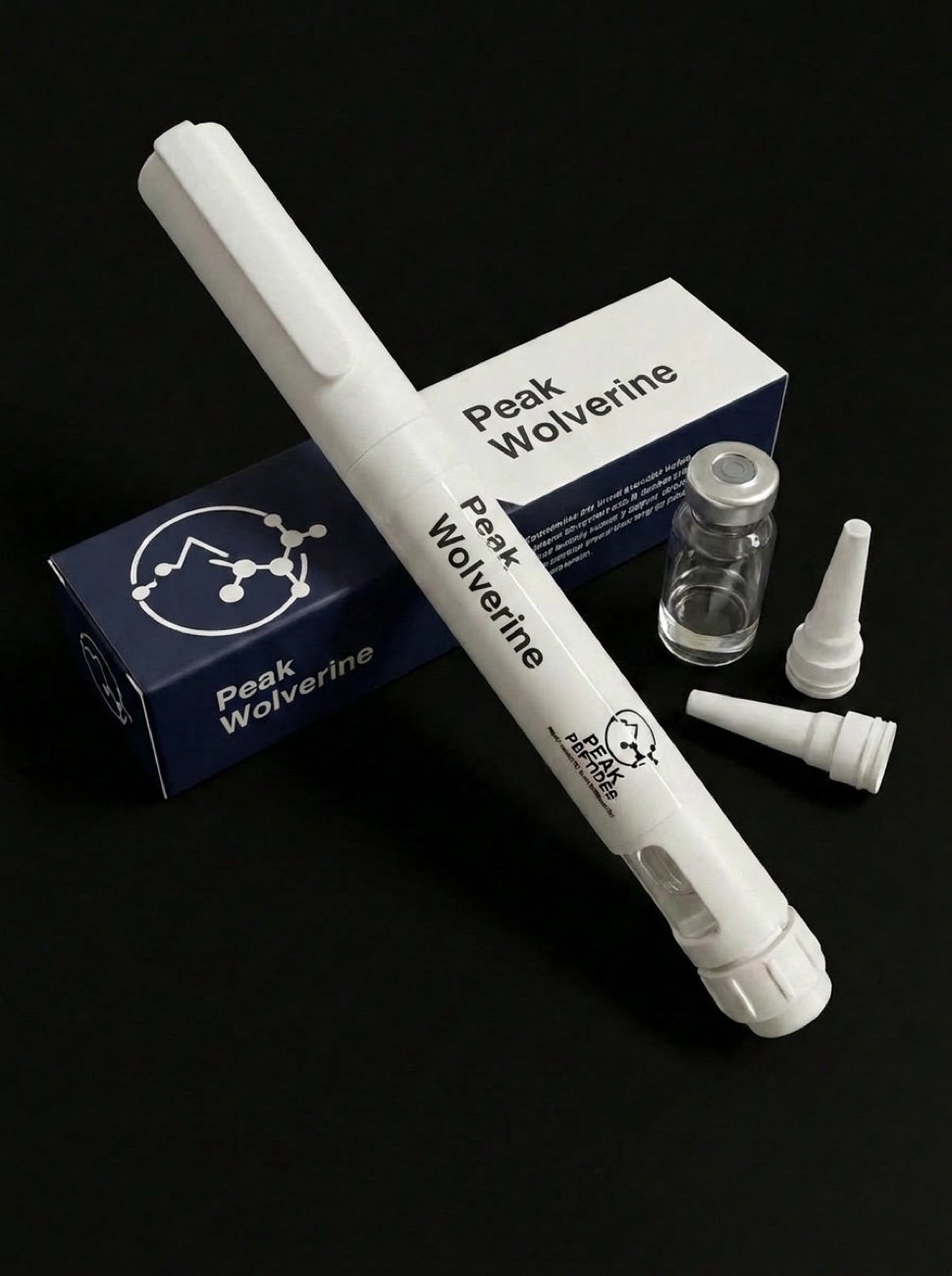
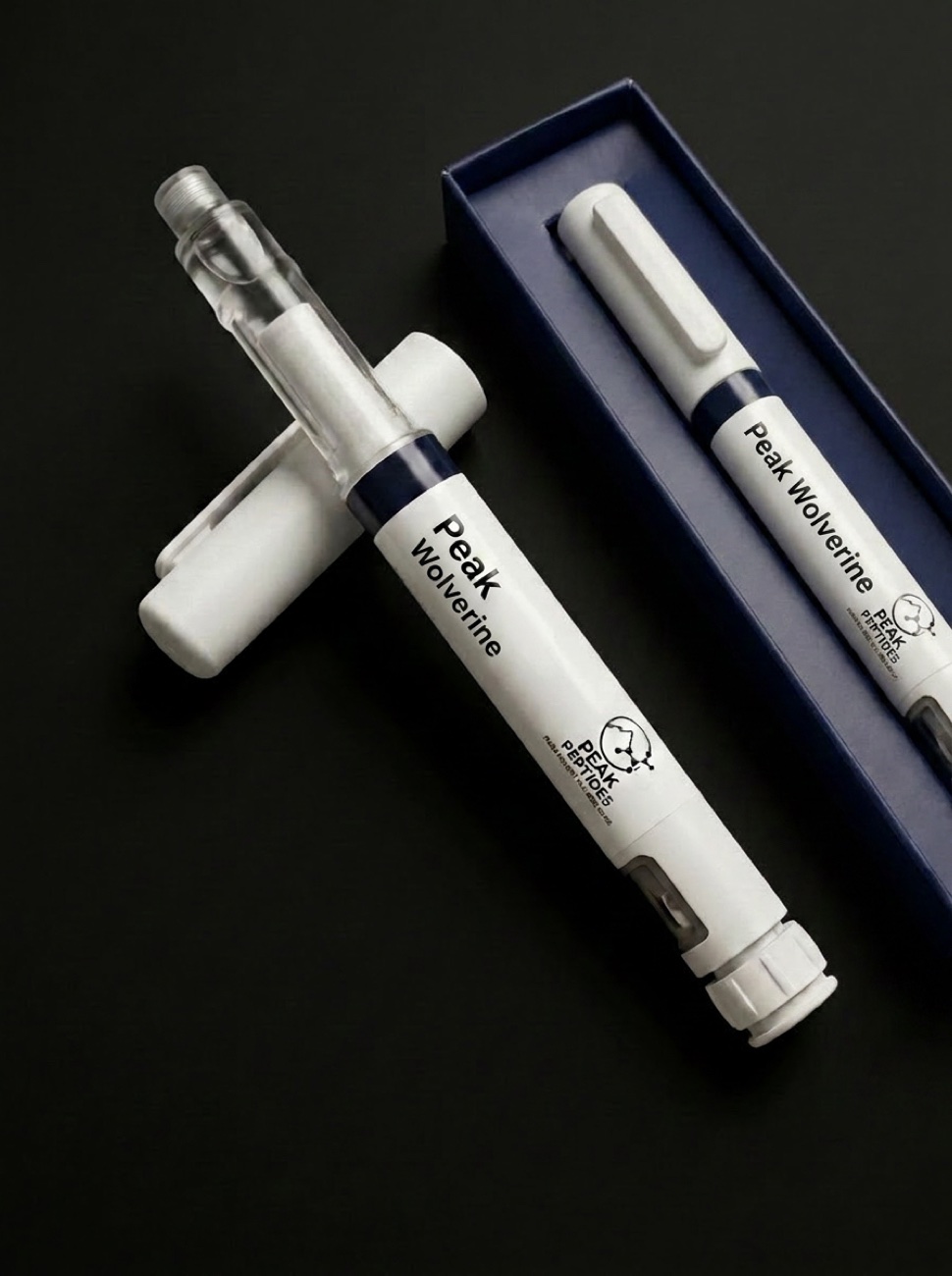
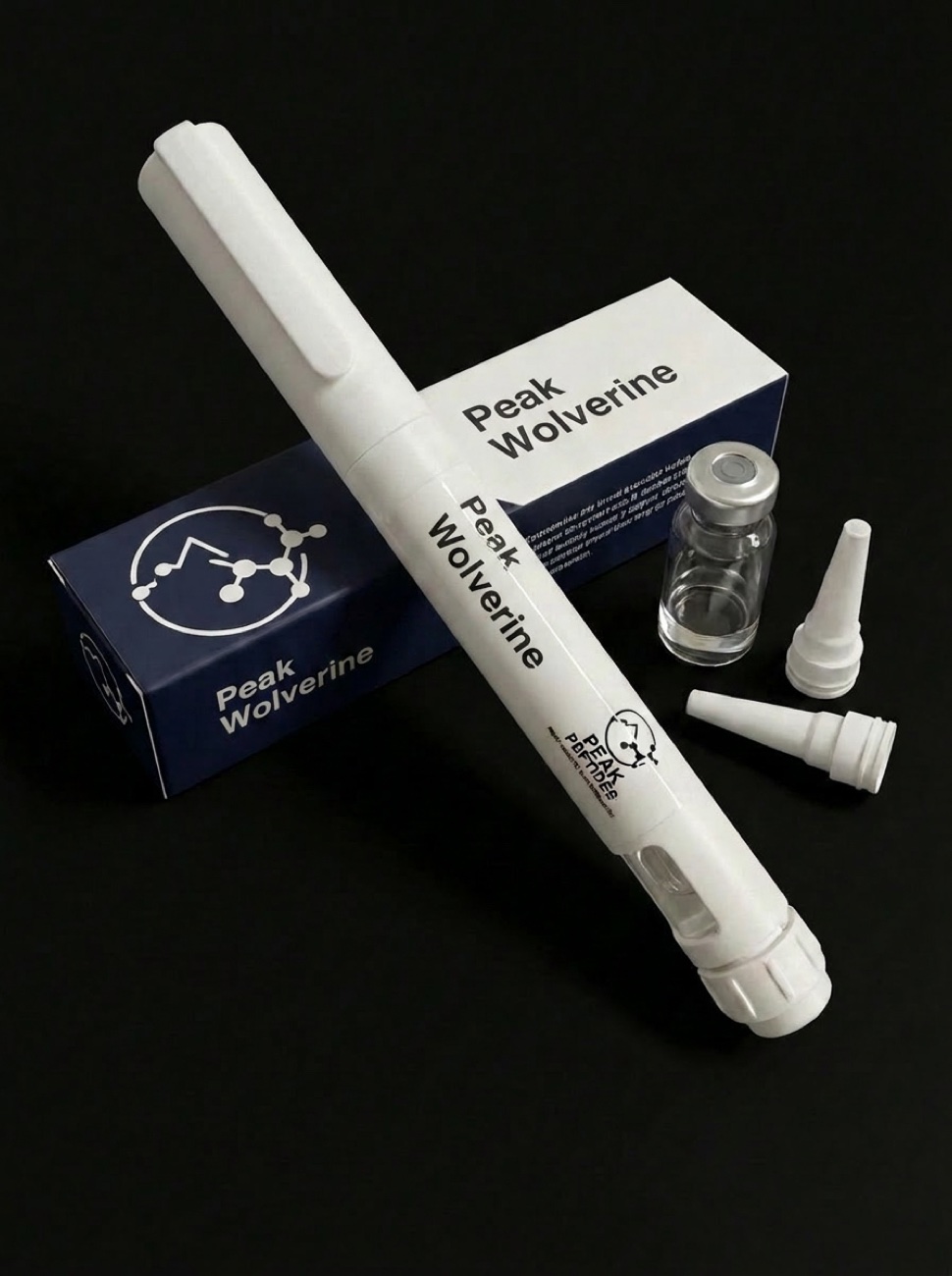
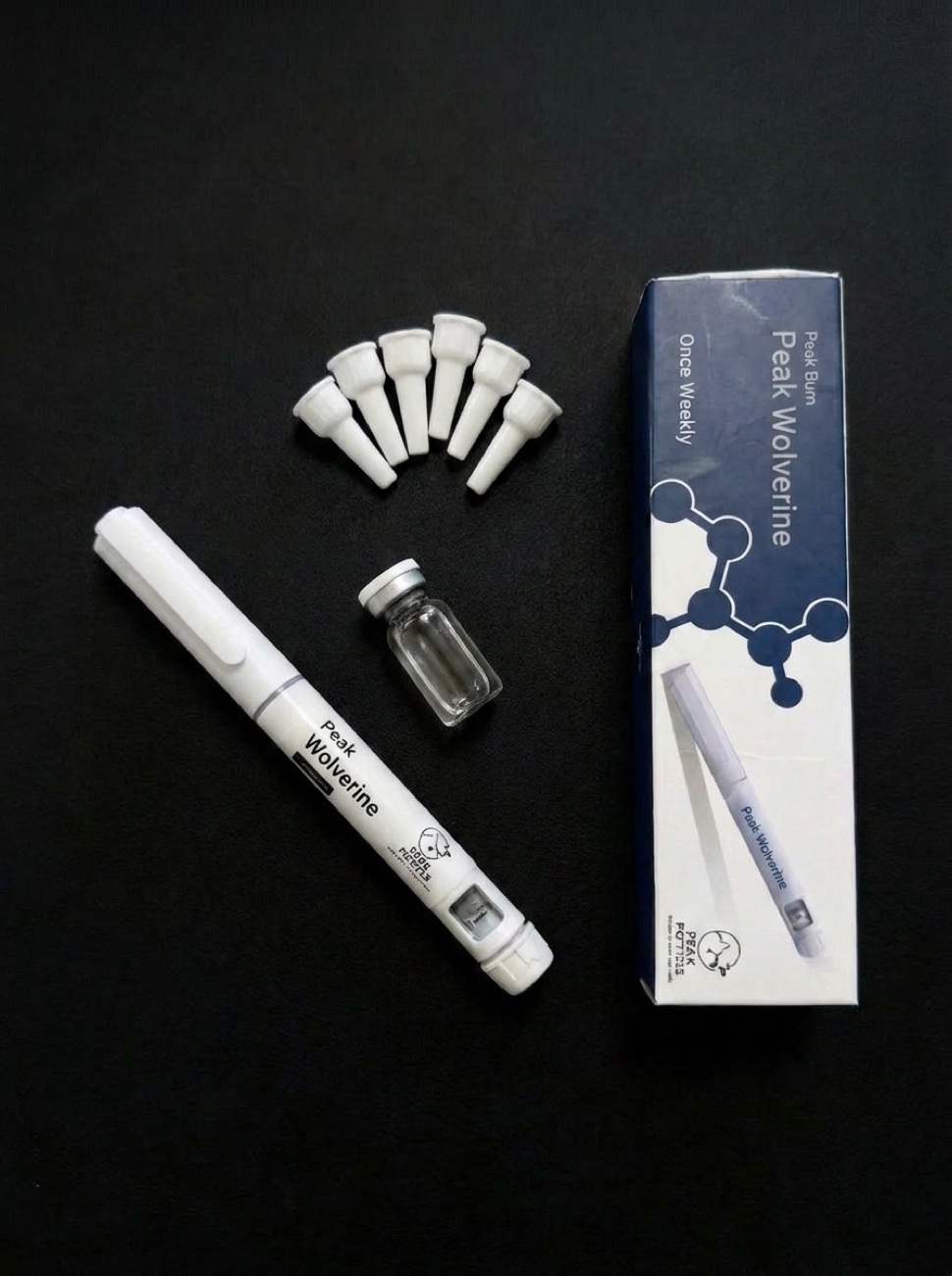
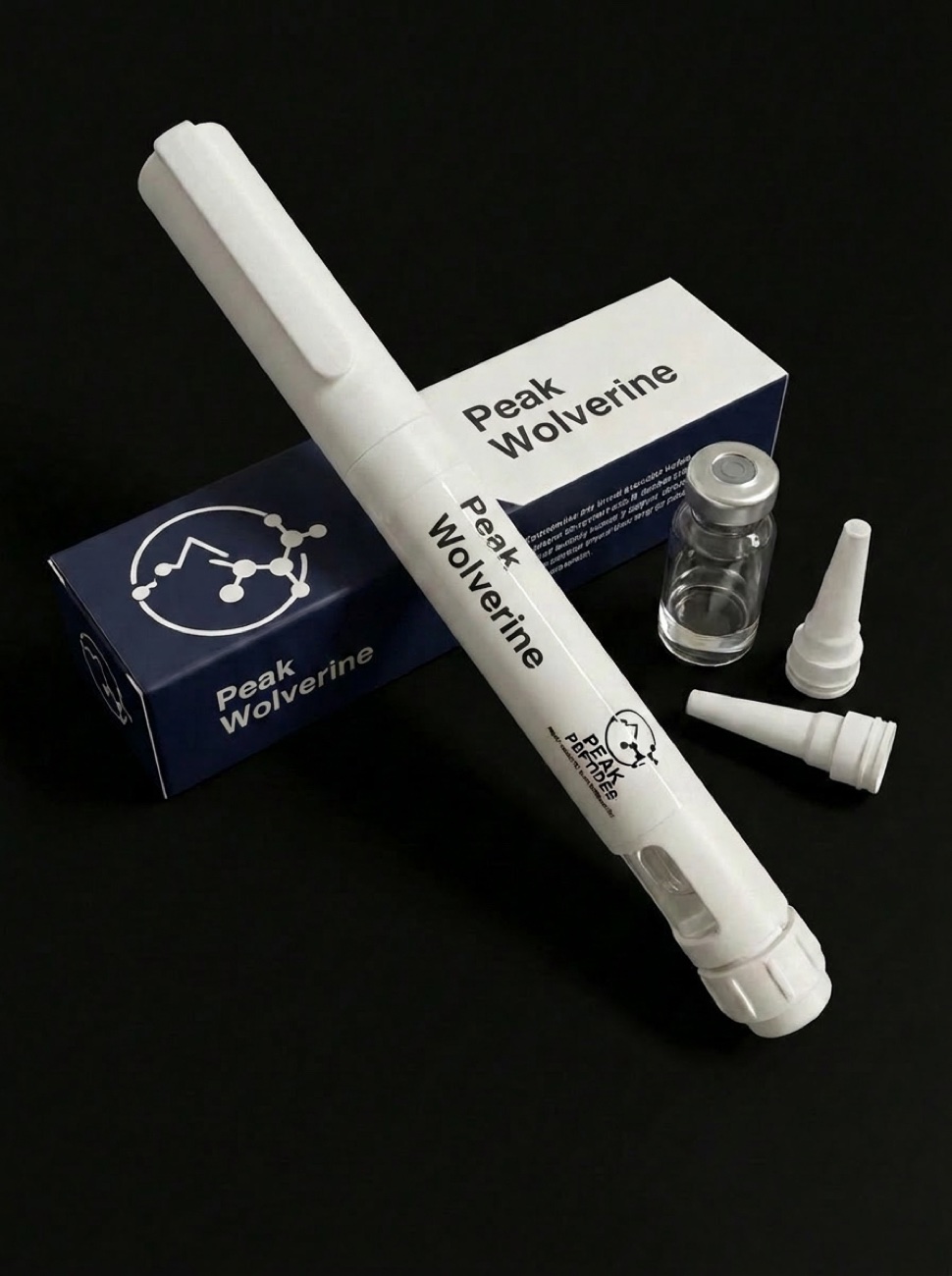
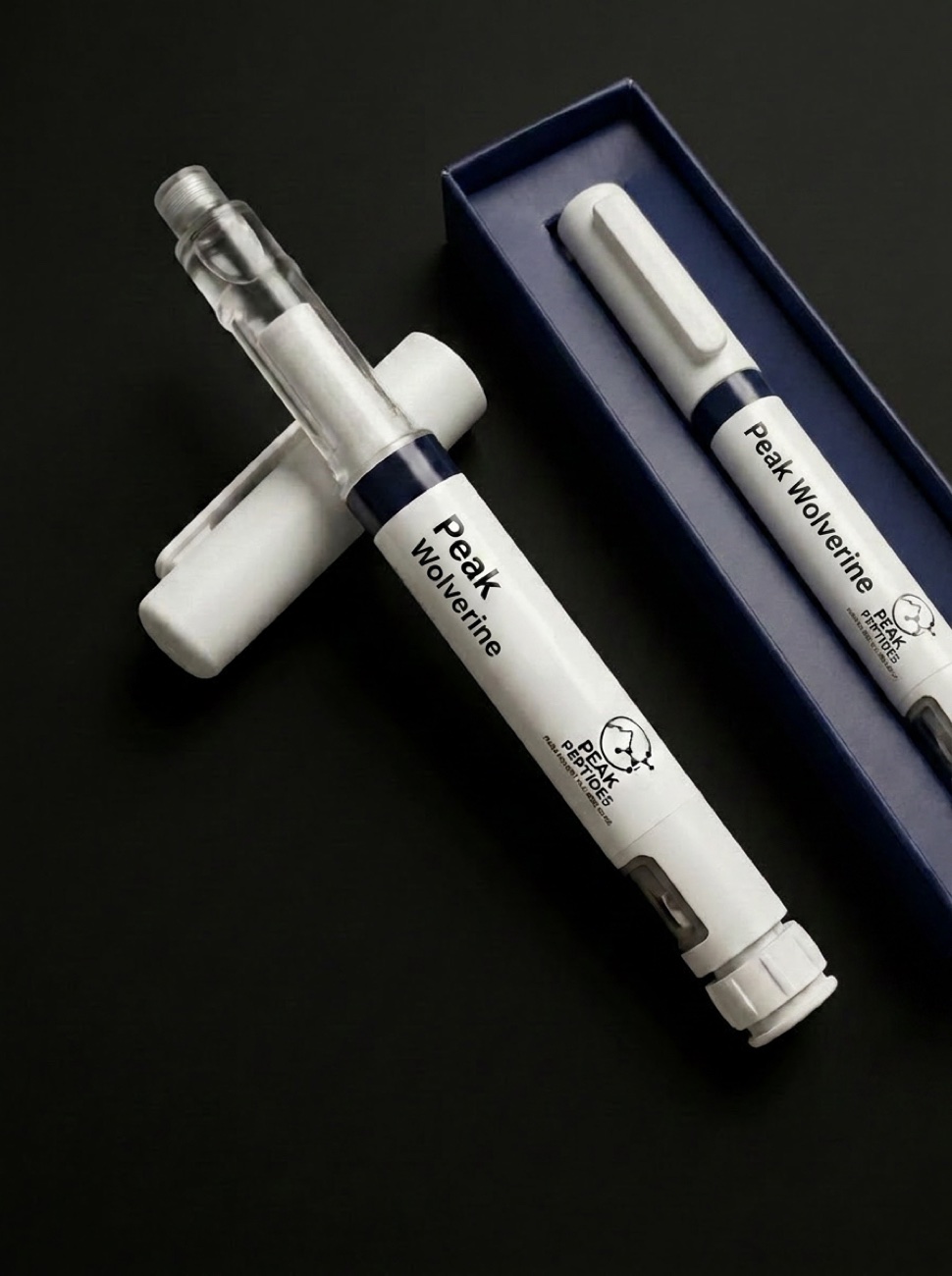
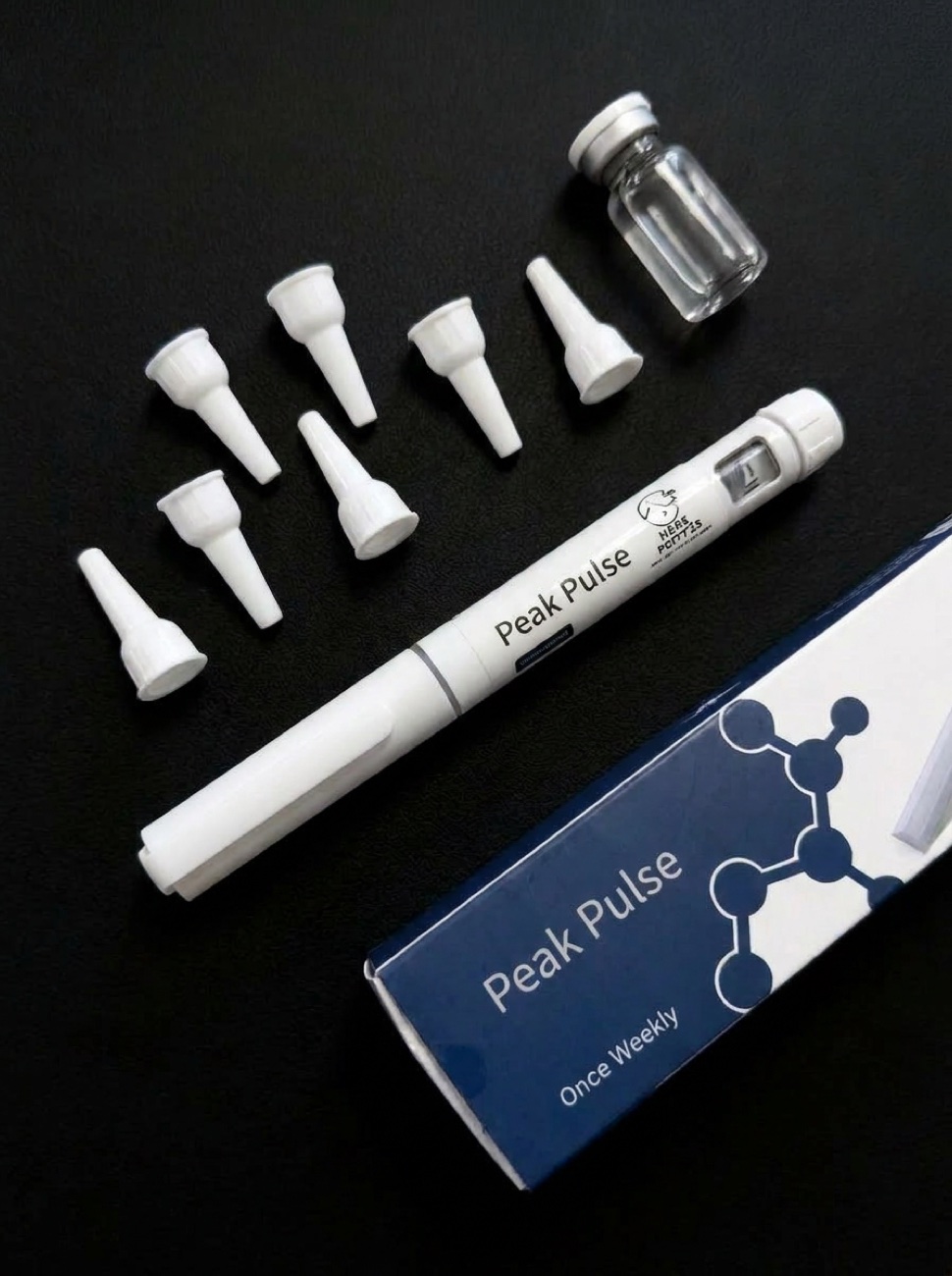
Your Peak Wolverine pre-filled injection pen, a 30-day supply of single-use needle tips, and bacteriostatic water for reconstitution — everything in one discreet, unbranded box.
Mechanism
triggers the repair cascade. mobilises the cells that carry it out. rebuilds what's broken. They don't overlap — they sequence.
Step 01
Drives new blood-vessel growth into avascular tendon tissue, upregulates growth-hormone receptors, and works through the nitric-oxide system.
Step 02
( β4)
β4)
Binds actin to let repair cells migrate into the wound faster, and reduces fibrous scar formation.
Step 03
Stimulates collagen and elastin synthesis and shifts tissue toward remodelling over degradation.
Clinical Data
We cite the compounds, not the product. These are published findings on and — the same compounds in Peak Wolverine.
Mayfield et al. · Am J Sports Med 2026
A clinical review cataloguing injectable / use in orthopaedic and sports-medicine practice.
PMID 41476424. Evidence is predominantly preclinical — see the honesty note below.
Masnec et al. · Pharmaceuticals 2025
Demonstrated efficacy in avascular tendon healing (animal model).
PMID 41471311.
Protocol
The loading-and-maintenance approach used in the research literature. Front-load to accelerate the repair cascade, then maintain at lower dose.
| Phase | Duration | Frequency | Expected Effect |
|---|---|---|---|
| Loading | Weeks 1–4 | Daily | Acute repair cascade — inflammation reduction within 72h |
| Maintenance | Weeks 5–8 | Every 2–3 days | Collagen remodelling — structural improvement in affected tissue |
| Consolidation | Weeks 9–12 | Twice weekly | Tissue integration — return to full load-bearing capacity |
| Preventive | Ongoing | Once weekly | Proactive maintenance — most athletes continue at this level |
Protocol based on dosing regimens used in published and research. Not medical advice. Consult a healthcare professional before use.
Customer Results
Torn labrum, 8 months of physio, nothing. Started Wolverine on week 2 of peak load. By week 6 I was back under 100kg squat with zero pain. My physio couldn't explain it. I could.Tim R. — Melbourne, 34, competitive powerlifter — Wolverine (
+ )
Chronic elbow tendinosis for 3 years. Every physio said 12 months at minimum. Wolverine + ice + reduced load and I was pain-free at 8 weeks. Running Burn at the same time — the stack is everything they say.Sarah K. — Brisbane, 41, CrossFit coach — Wolverine + Burn
I'm 58. My knees have been a liability since my forties. Running Wolverine for 10 weeks. Not pain-free but genuinely functional — I'm back to hiking which I gave up at 52. I didn't expect this.Greg L. — Perth, 58, retired — Wolverine (
+ + )
FAQ
and function as systemic repair signals — they don't require an active injury to be active. Many users run Wolverine preventively during high training loads (marathon prep, heavy powerlifting blocks, high-frequency sport) or as general connective tissue maintenance. The distinction in the research is that response is faster with active tissue damage, but the repair pathway is activated regardless.
addresses the repair signal and blood vessel formation at the injury site. adds cell mobilisation — it moves the cells that carry out the repair to where they're needed. adds structural protein synthesis, which determines whether the repaired tissue is strong or just scarred. The three compounds operate sequentially on the same repair cascade — each covering what the others don't.
 ), rapid body composition change often coincides with increased physical activity. Wolverine supports connective tissue under that load. There are no known pharmacological interactions between and , , or — they operate on entirely different receptor systems and pathways.
has one of the most studied safety profiles in peptide research — no systemic toxicity has been observed in any published study, including long-duration animal studies. similarly shows no toxicity profile. is a naturally occurring tripeptide present in human plasma. The most commonly reported response is transient injection-site redness, which resolves within 24 hours. No serious adverse events have been attributed to any of the three compounds in peer-reviewed literature.
), rapid body composition change often coincides with increased physical activity. Wolverine supports connective tissue under that load. There are no known pharmacological interactions between and , , or — they operate on entirely different receptor systems and pathways.
has one of the most studied safety profiles in peptide research — no systemic toxicity has been observed in any published study, including long-duration animal studies. similarly shows no toxicity profile. is a naturally occurring tripeptide present in human plasma. The most commonly reported response is transient injection-site redness, which resolves within 24 hours. No serious adverse events have been attributed to any of the three compounds in peer-reviewed literature.
The Stack
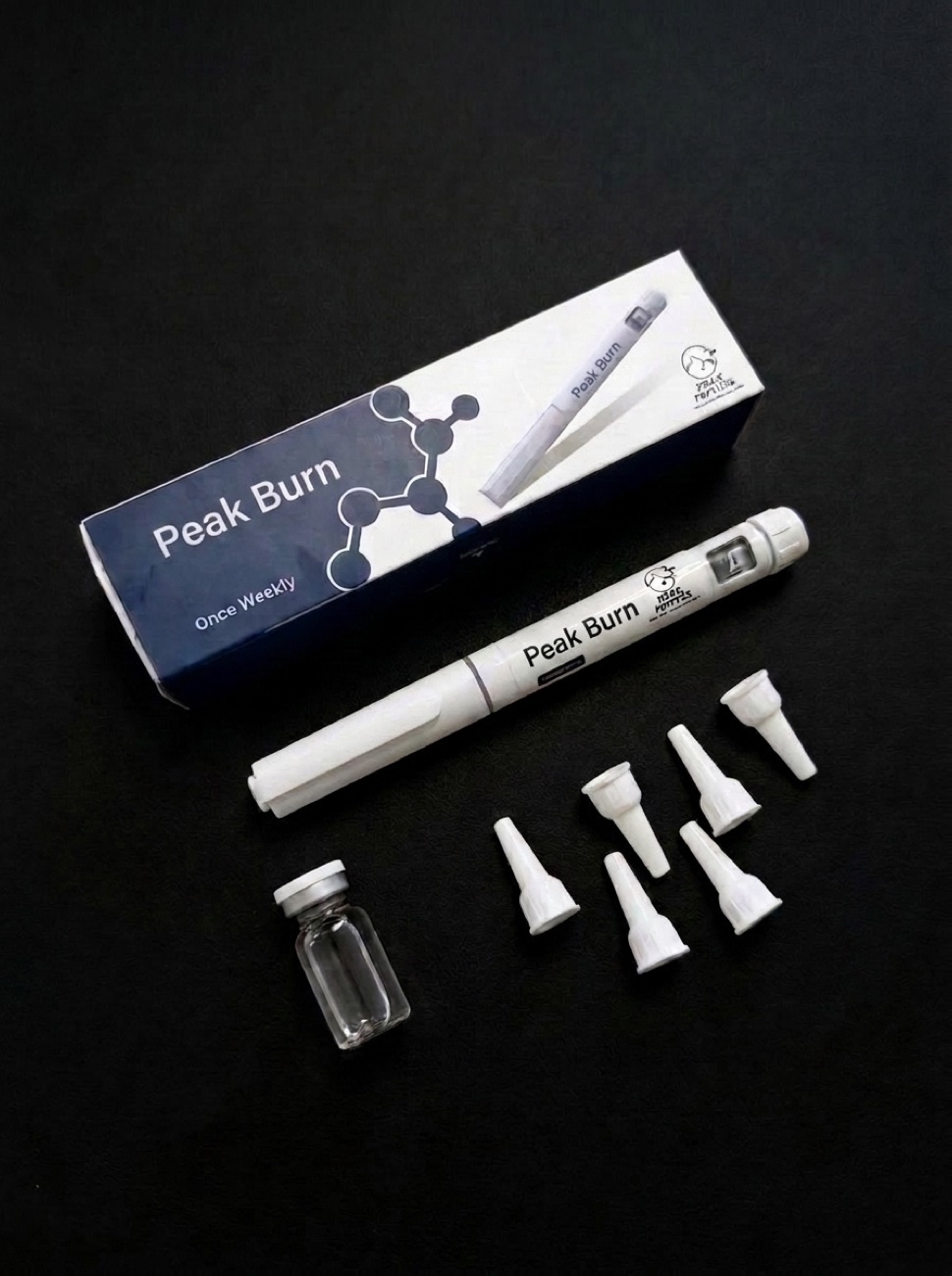
Most customers who run Wolverine pair it with Burn for body recomposition under load, or Pulse for GH-driven tissue regeneration.
24.2% mean body weight reduction.

 ·
· 
Amplify your body's own repair signal.